Learning Beyond the Classroom: Visit to the Economic History Museum
Learning Beyond the Classroom: Visit to the Economic History Museum
Tharika Perera
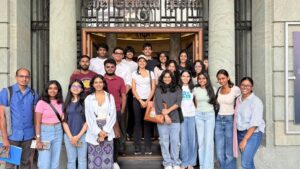
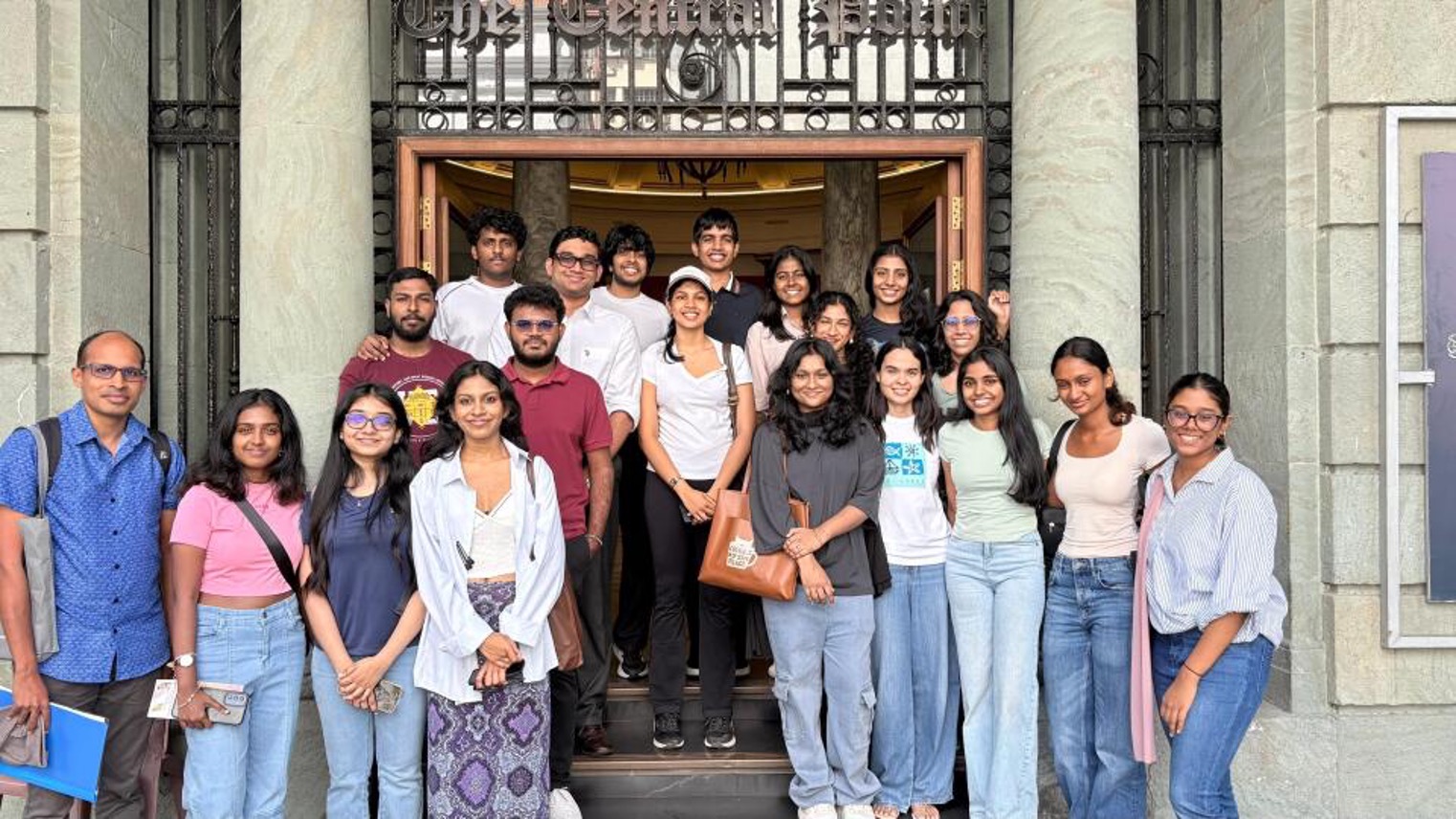
On 23 December 2025, students following Monetary Economics module took part in a guided educational visit to the Economic History Museum as part of their academic learning. The visit was organised and led by Mr. Travis, Lecturer in Monetary Economics and Quantitative Finance, with the aim of helping students connect economic theory with real-world historical evidence.
The visit was designed to support learning beyond the classroom by allowing students to see and engage directly with the evolution of money. Instead of learning only through lectures and textbooks, students were able to observe how monetary systems developed over time and how they functioned in practice.
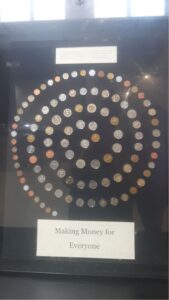
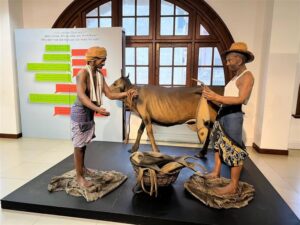
Throughout the museum, students explored exhibits that showed the transition from barter systems to early forms of money, and later to more complex monetary arrangements. These displays helped clarify key ideas discussed in the module, such as why barter systems failed, how money gained acceptance and trust, and how currencies evolved to meet changing economic needs.
The visit also helped students understand that money is not just a technical tool, but a social and economic concept shaped by history, culture, and policy. By examining physical evidence such as coins, notes, and historical records, students were able to trace how monetary systems responded to trade, governance, and economic change.
As part of the London School of Economics and Political Science curriculum delivered at RIC, this structured field visit strengthened students’ understanding of the Nature of Money chapter in a meaningful and engaging way. It encouraged observation, discussion, and critical thinking, helping students move from abstract theory to applied learning.
Overall, the visit to the Economic History Museum was a valuable academic experience that deepened students’ understanding of monetary economics and highlighted the importance of experiential learning in economics education.