AI Literacy Series Empowers Students and Staff to Explore the Future of Work and Innovation
AI Literacy Series Empowers Students and Staff to Explore the Future of Work and Innovation
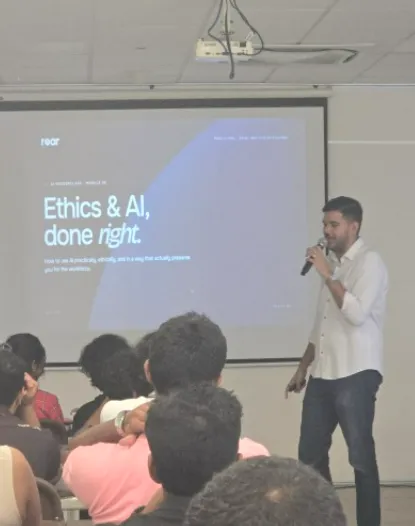
Royal Institute Campus (RIC), in collaboration with industry experts from BrandRadar and Roar Global, successfully conducted the AI Literacy Series during May and June 2026, providing students and academic staff with practical insights into the rapidly evolving world of Artificial Intelligence (AI).
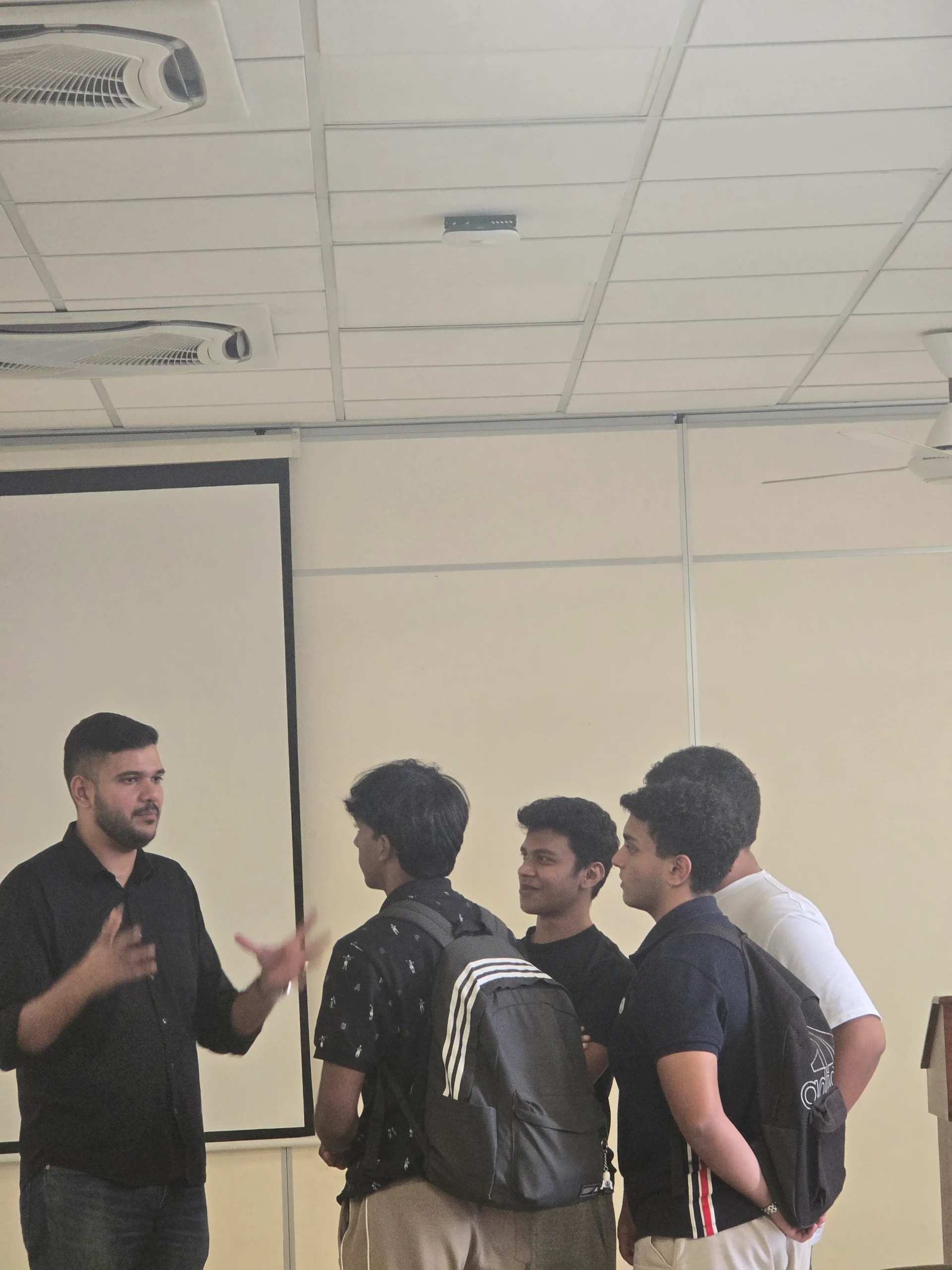
The four-part series was facilitated by Mr. Niresh Bandaranayake, Head of Growth at BrandRadar, and Mr. Roshith Ranasinghe, Head of Growth at Roar Labs, who brought extensive industry experience and practical expertise to the programme.
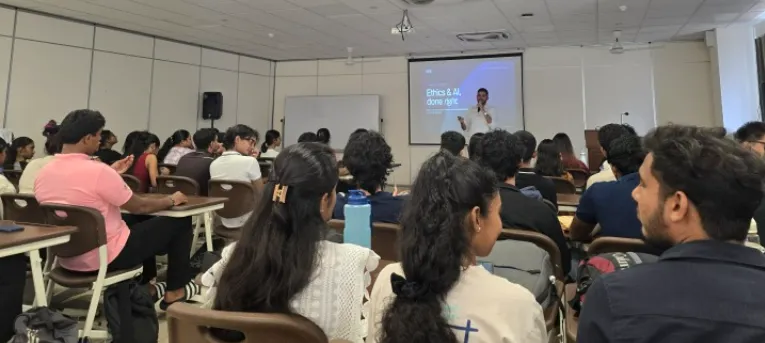
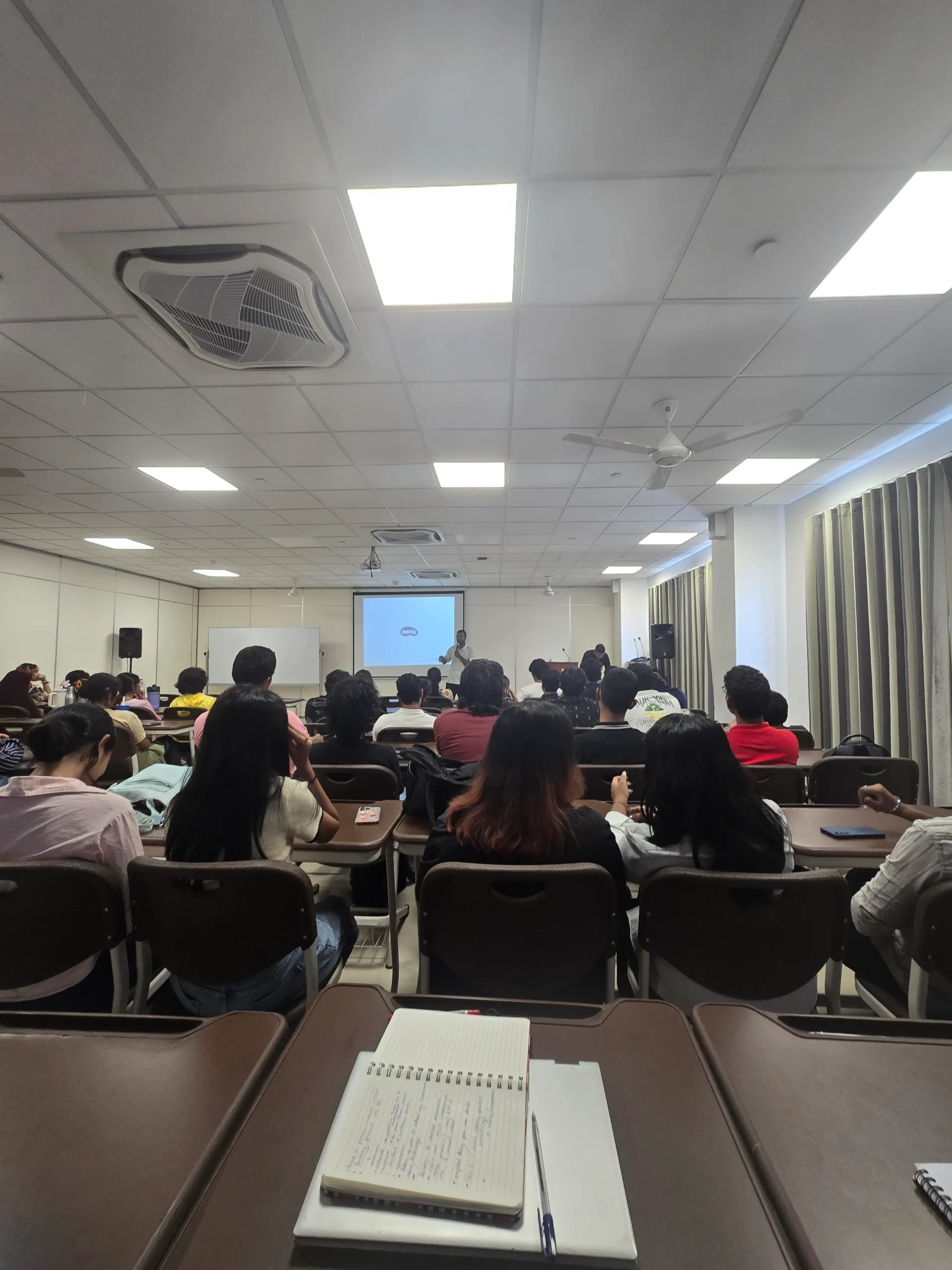
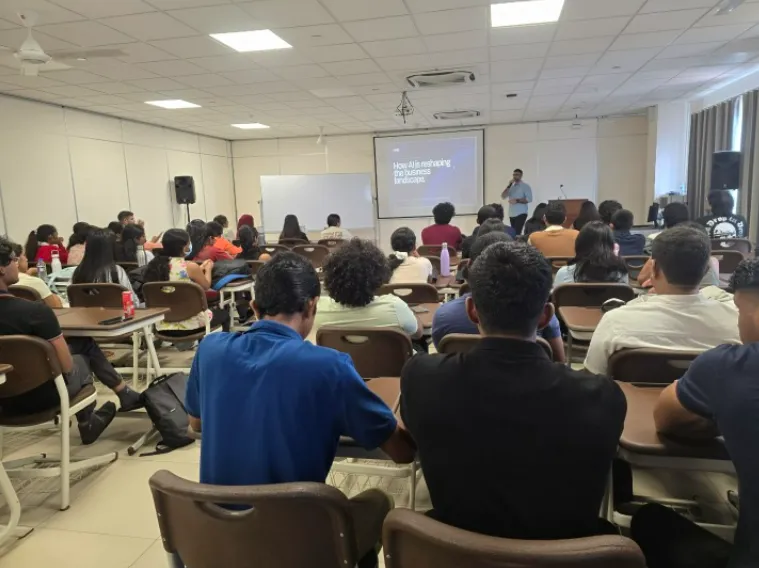
The series consisted of four interactive sessions held on 27th May, 3rd June, 10th June, and 17th June 2026, attracting strong participation throughout. The first two sessions alone saw over 70 participants attending each session, including 10 members of the academic staff, demonstrating the growing interest in understanding and applying AI across disciplines.
Exploring AI in the Modern World
The sessions began by introducing participants to the transformative role of AI in today’s society and workplace. Key topics included:
• How AI is reshaping the business landscape
• Ethical and responsible use of AI
• Practical applications of AI tools in education and industry
Participants engaged in discussions on both the opportunities and risks associated with AI adoption, while learning how AI can be used effectively and responsibly in academic and professional settings.
Feedback received from attendees was overwhelmingly positive, with participants highlighting the practical nature and relevance of the sessions.
“It was very informative and helped me see AI in a new light.”
“Great session. Very valuable.”
“As a student exploring options for my future career, this session actually gave me insight into what aspects to think about. Thank you for conducting this workshop.”
Following feedback from the first session, the facilitators incorporated more demonstrations and practical AI tools into subsequent sessions, resulting in even greater engagement and interaction.
One of the platforms introduced was Arena.ai, which enables users to compare outputs from multiple AI models and promotes more transparent and informed AI usage.
Testing Knowledge Through an AI Quiz
The third session, held on 10th June, focused on reinforcing participants’ understanding of the concepts covered throughout the series. Students took part in an interactive AI Knowledge Quiz, which tested their understanding of AI applications, ethics, governance, prompting techniques, and emerging technologies.
The session encouraged active participation and healthy competition while helping students consolidate their learning in an engaging and collaborative environment.
Building Products with AI
The final session, held on 17th June, shifted the focus from understanding AI to creating with AI. Participants were introduced to the rapidly growing field of AI-assisted product development, where artificial intelligence can be used to transform ideas into products, services, and business solutions.
Students explored how AI can support various stages of product development, including:
• Identifying market opportunities and customer needs
• Generating business and product ideas
• Designing prototypes and user experiences
Through practical demonstrations and real-world examples, participants witnessed how AI is increasingly becoming a strategic tool for innovation, entrepreneurship, and problem-solving.
The session also highlighted the importance of combining subject knowledge with AI capabilities, demonstrating how students from disciplines such as business, economics, finance, psychology, law, and social sciences can leverage AI to create value in their future careers.
Preparing Students for an AI-Driven Future
The AI Literacy Series forms part of RIC’s commitment to preparing students for an increasingly technology-driven world. By bringing together industry practitioners, academic staff, and students, the programme provided valuable exposure to emerging technologies while encouraging critical thinking, creativity, and responsible AI adoption.
Given the enthusiastic participation and positive feedback received throughout all four sessions, the series successfully demonstrated the growing importance of AI literacy and the need for future-ready skills in higher education. RIC looks forward to continuing similar initiatives that bridge the gap between academic learning and industry innovation.